Australia is home to over 20 freshwater turtle species. Half of these are officially listed by national and international organisations as threatened. This is due to factors such as habitat loss, predation, climate change, and mortality from motor vehicle collisions.
Freshwater turtles are essential to the health of our aquatic ecosystems. They function as 'cleaners' by consuming dead animals. This helps maintain healthy water quality and cycles nutrients. They also eat insects and small fish, which keeps their populations under control.
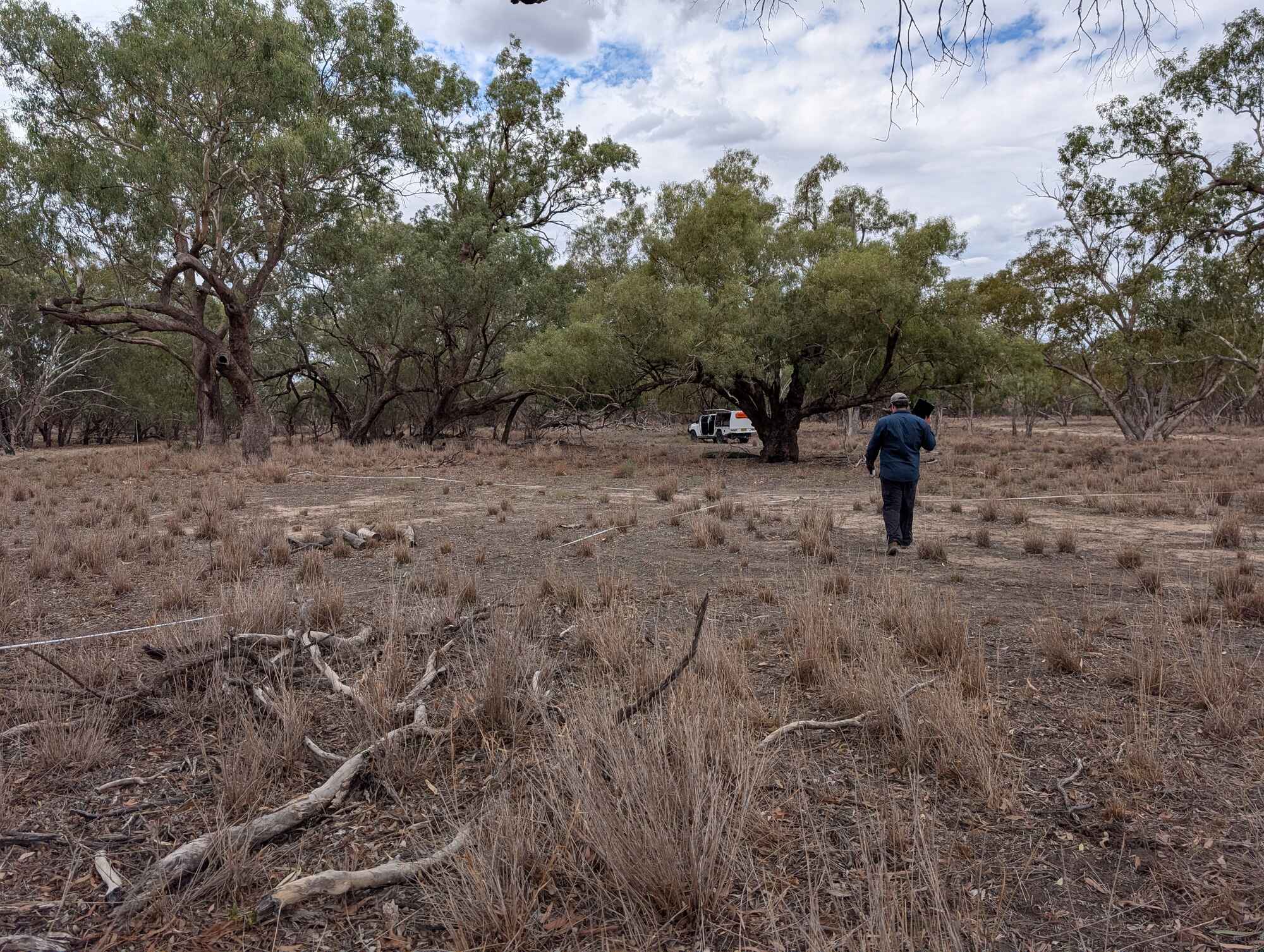
The Macquarie River and Marshes Flow-MER team and the NSW Department of Climate Change, Energy, the Environment and Water (NSW DCCEEW) are supporting University of New South Wales (UNSW) student William Hall’s two-year honours project. William is tracking turtle movement in response to environmental water delivery in the Macquarie Marshes.
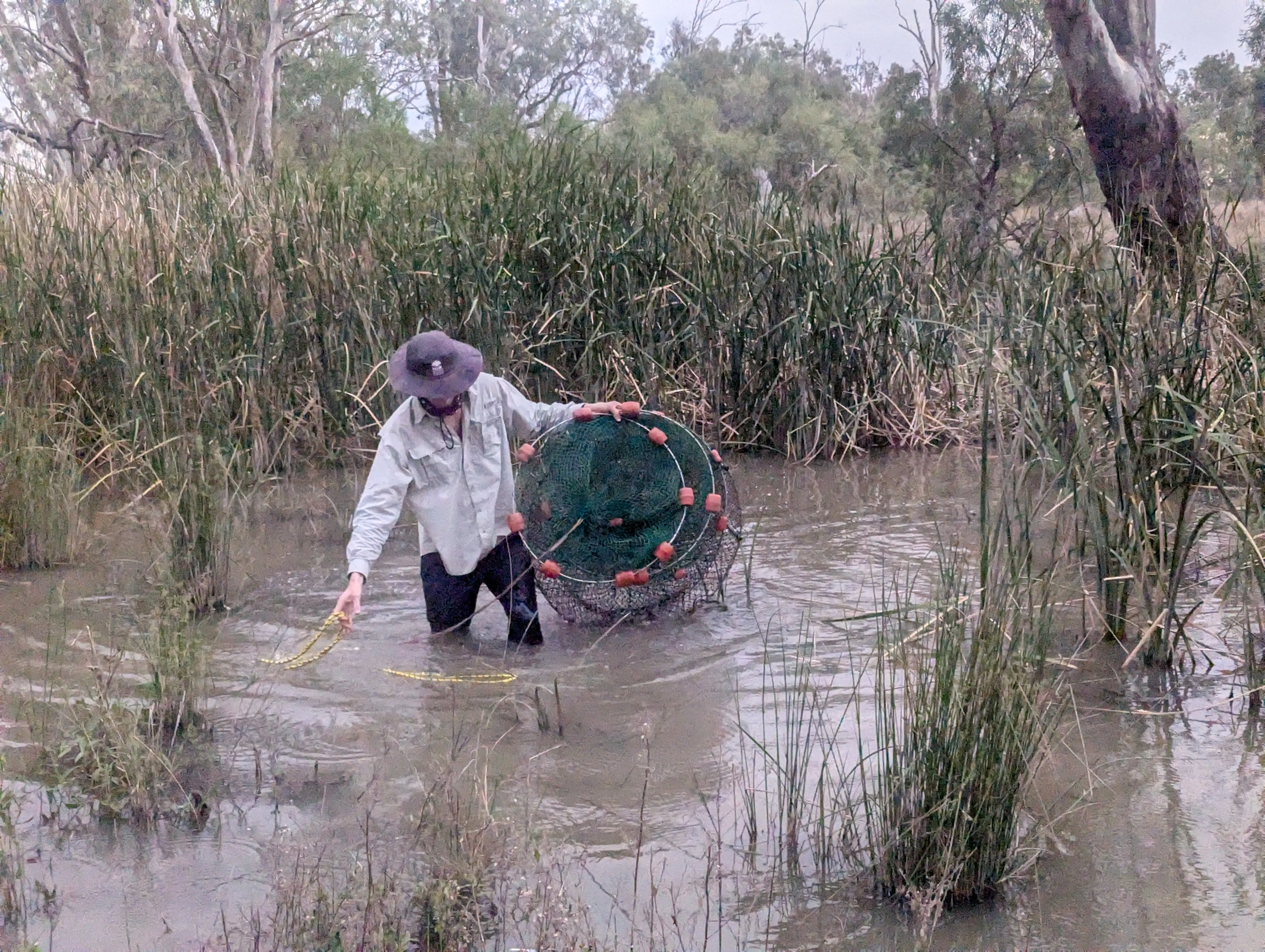
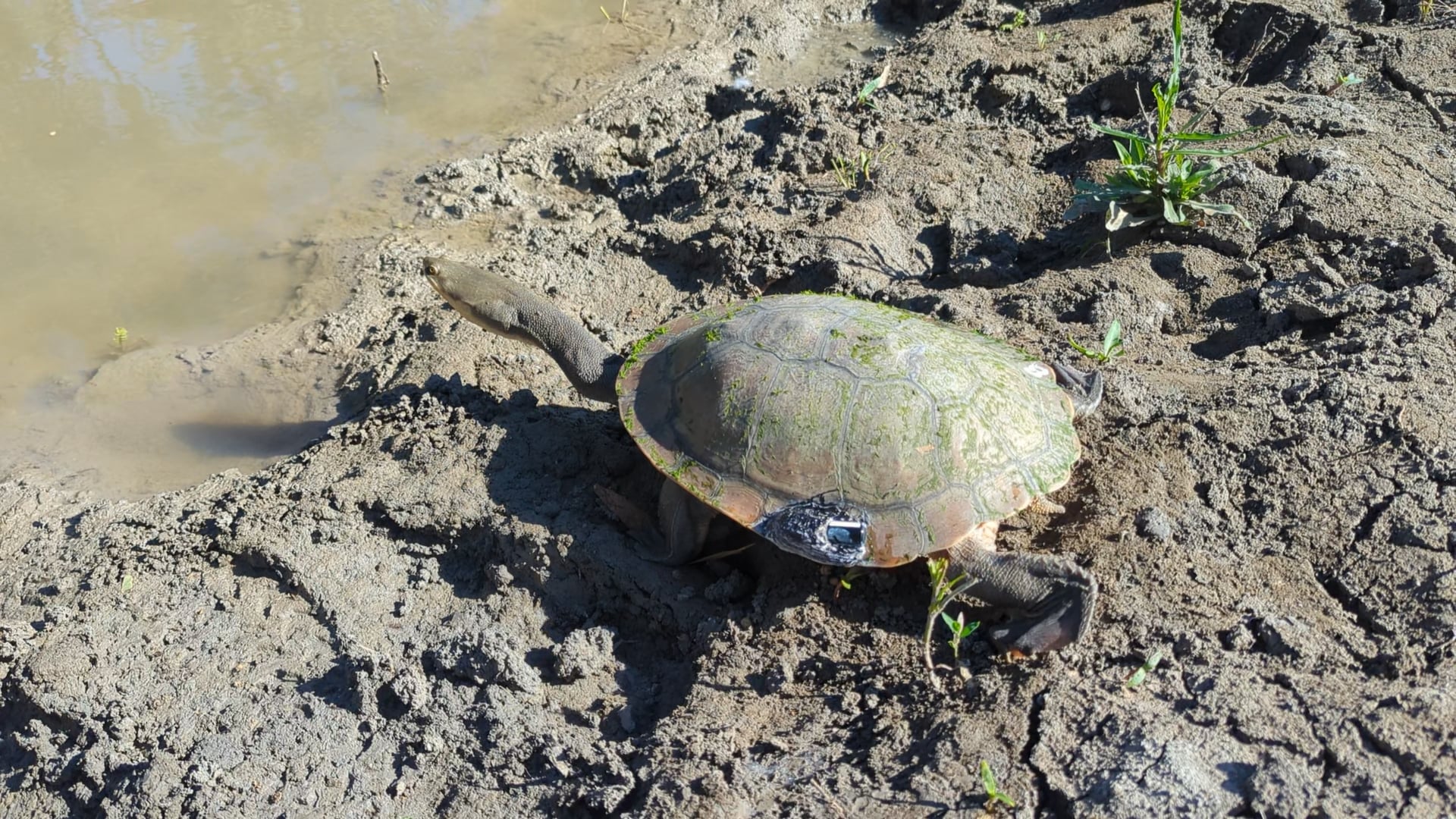
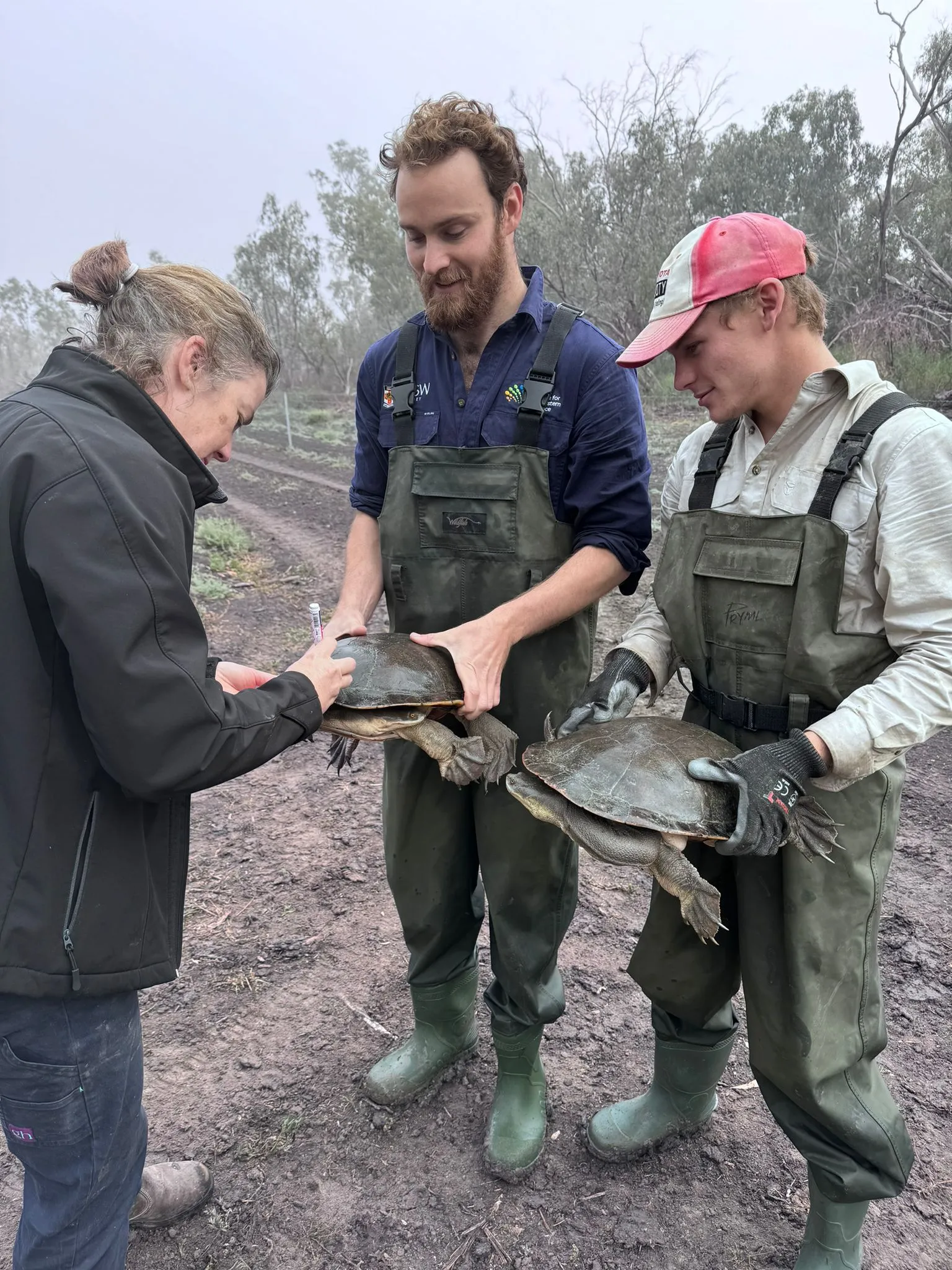
In early October, William and Flow-MER team members tagged and are now tracking 10 broad-shelled (Chelodina expansa) and 10 eastern long-necked (Chelodina longicollis) turtles. These are two of three species in the Marshes. The other species is the Macquarie turtle (Emydura macquarii), also known as the Murray River turtle.
The team want to understand whether the turtles move long distances or stay in one location. This information helps inform water managers where environmental water needs to be delivered.
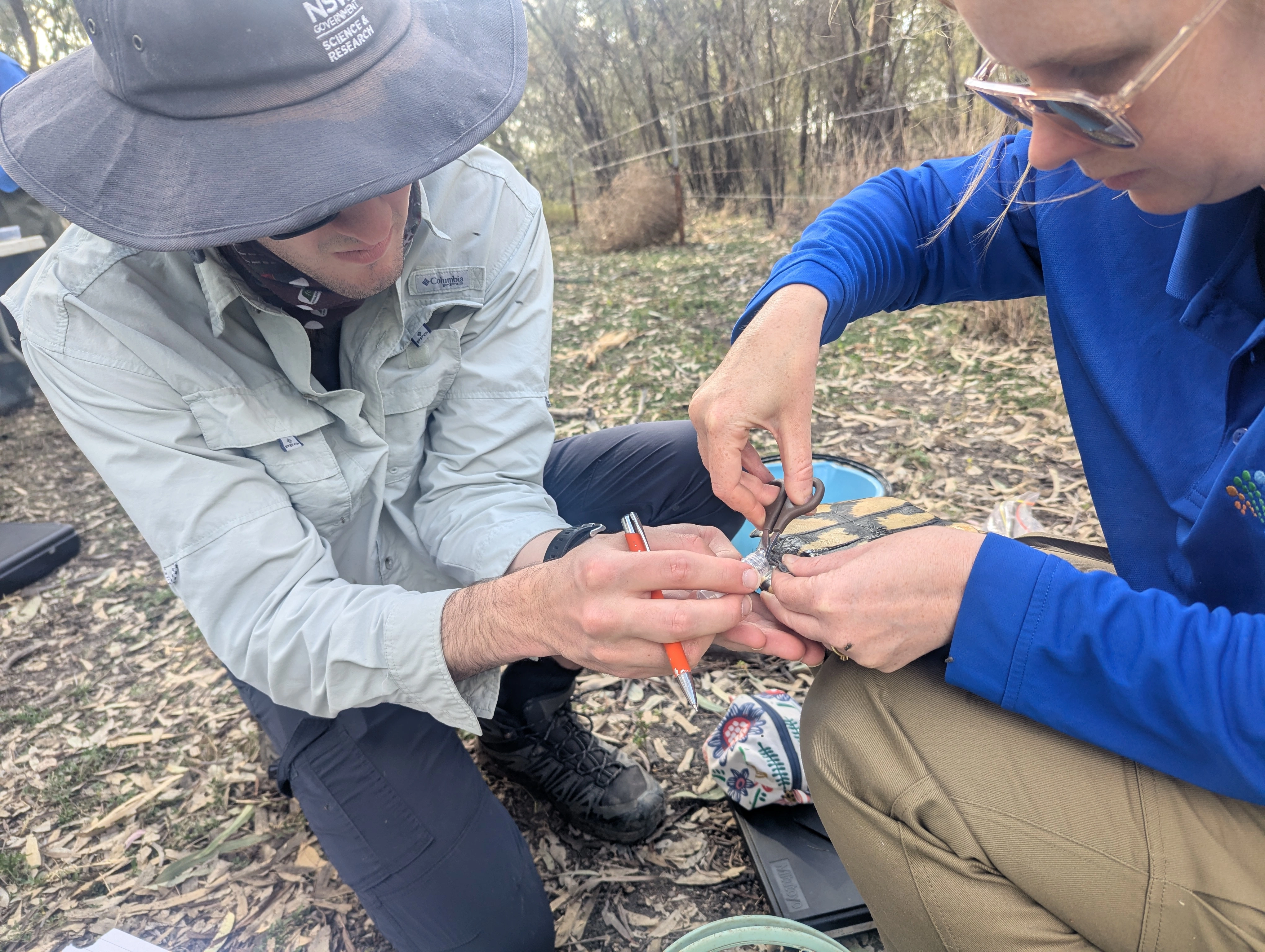
Signals from the acoustic tags on the turtles are detected by several NSW Department of Primary Industries and Regional Development (NSW DPIRD) acoustic tracking receivers set up in the Marshes. The receivers are also used for the Macquarie River and Marshes Flow-MER Native Fish work.
When adding the trackers, the team also measured the turtles’ weights and the length of their carapaces (shells) from head to tail. They also took nail clippings, which the team will analyse to understand their diet. All data will be compared with data collected during a dry period between 2014 and 2015 to assess the current health of turtles in the Marshes.
Flow-MER, the UNSW, and the NSW DCCEEW are funding the research project.
A broad shell turtle being released back into the Macquarie Marshes with a tracker. Source: Commonwealth Environmental Water Holder (CEWH)
.avif)