.avif)
Results of the first Narran Lakes fish surveys since 2008 paint a mixed picture. There were signs of resilience in some species, declines in others, and a freshwater ecosystem struggling to be healthy after many dry years.
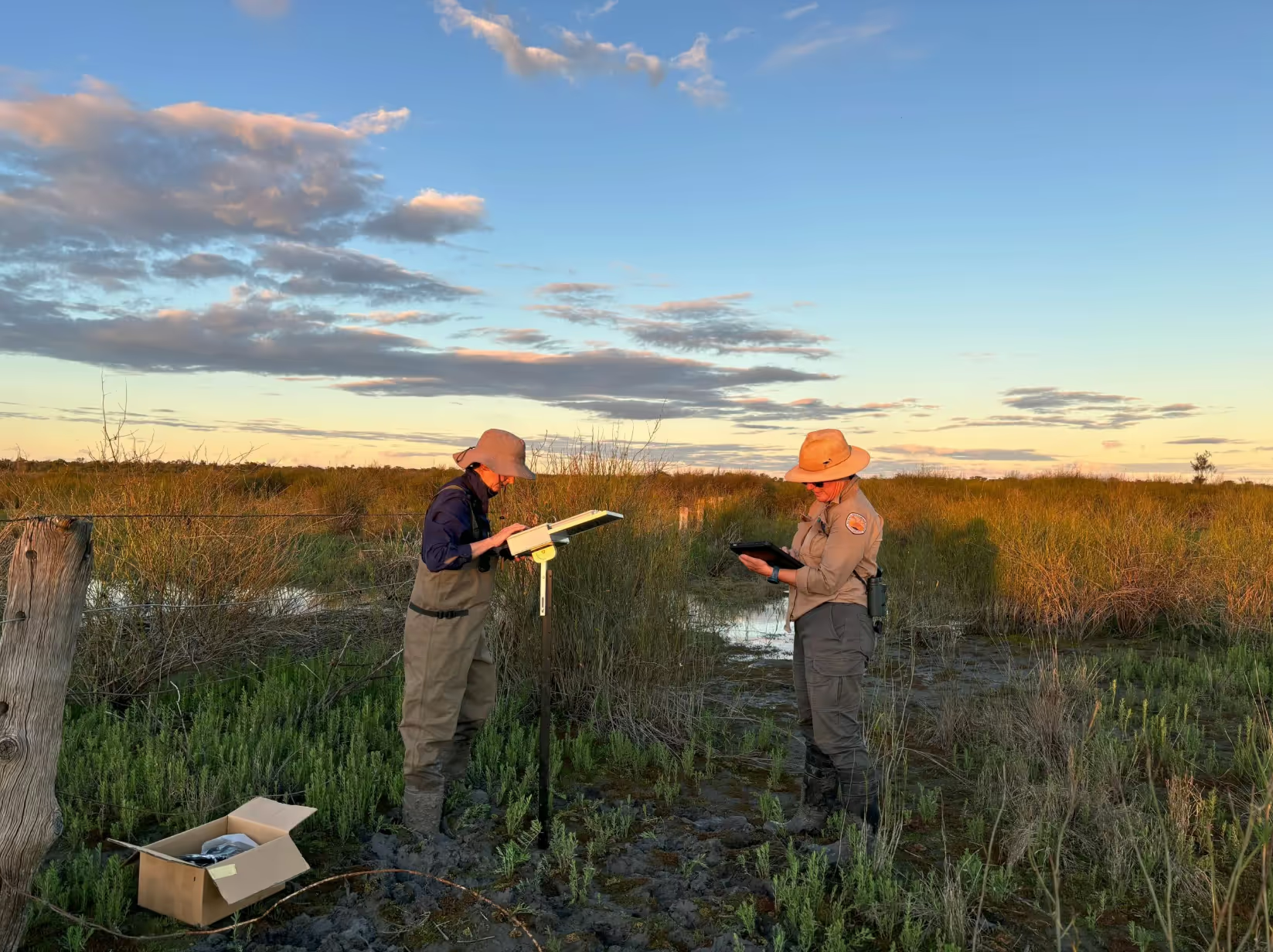
The surveys were conducted in October 2024 during falling water levels and then again in May 2025 after small top-up flows. Surveys were undertaken at upstream, downstream, and floodplain locations of Narran Lakes using nets and, where possible, electrofishing.
Researchers expected to find 11–12 species based on previous studies, but detected only eight or nine per site.
Four species dominated the catches: bony bream (Nematalosa erebi), spangled perch (Leiopotherapon unicolour), golden perch (Macquaria ambigua), and the introduced European carp (Cyprinus carpio).
Substantial numbers of juvenile and adult golden perch showed that this native species was bouncing back well following dry years. Hyrtl’s catfish (Neosilurus hyrtlii) were doing better upstream, with evidence of breeding.
Other native species told a different story. Smaller species such as Australian smelt (Retropinna semoni) and carp gudgeon (Hypseleotris spp.) showed little sign of recovery. No Murray cod were found at any sites.
The team found that European carp numbers surged between surveys. In October, they accounted for only five per cent of the fish caught. By May, this had jumped to roughly 30 per cent due to abundant water creating favourable conditions. This leap raises concerns about further impacts on native species.
All survey locations provided nursery habitat; however, the floodplains contributed less than expected.

Large numbers of the common yabby were found in May 2025, but initial findings from a third survey in December 2025 suggest numbers have returned to background levels, similar to those in October 2024.
Though the cause is unclear, the team also noted major turbidity (cloudiness/murkiness) throughout the system. The water was so turbid it resembled ‘chocolate milk’.
Overall, the surveys show a system in transition. There was a recovery post-drought, but it is variable across species, particularly for small-bodied native fish. However, the recovering species are still facing ongoing pressure from carp dominance.
With a clear correlation between water flows and increasing fish numbers, environmental water flows into the system could help struggling native fish species to recover.
Austral Research and Consulting conducted the study on behalf of UNSW. A third survey in early December will help to refine results further.