%20(1).jpg)
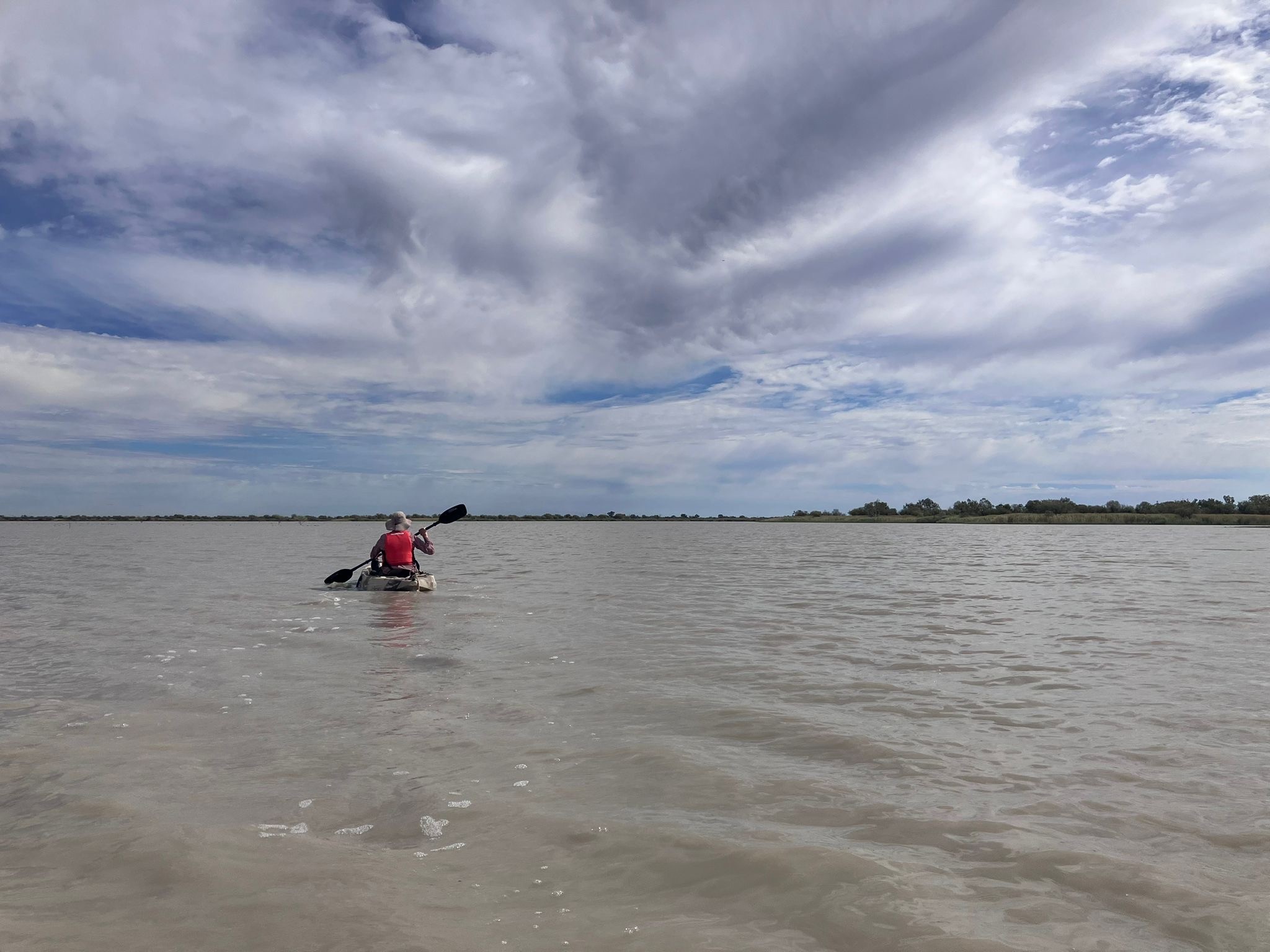
The 2024-25 water year was another relatively wet year in the Gwydir / Guwayda Wetlands, with extensive areas of short- to longer-term inundation periods across the three wetland systems (Gingham, Lower Gwydir, Mallowa) and Ballin Boora Creek system.
Commonwealth and NSW water for the environment was delivered in 2024-25 into key wetland areas over summer and autumn. These deliveries were particularly influential in the Mallowa, Gingham, and Lower Gwydir watercourses and wetlands, with water for the environment making up 96%, 21%, and 10% of the total flows during the 2024-25 water year into these systems respectively. Above average rainfall in March and very high rainfall in April (about four times the average April rainfall) contributed to larger natural inflows and supported further wetland and creek inundation which also maintained or improved vegetation condition.
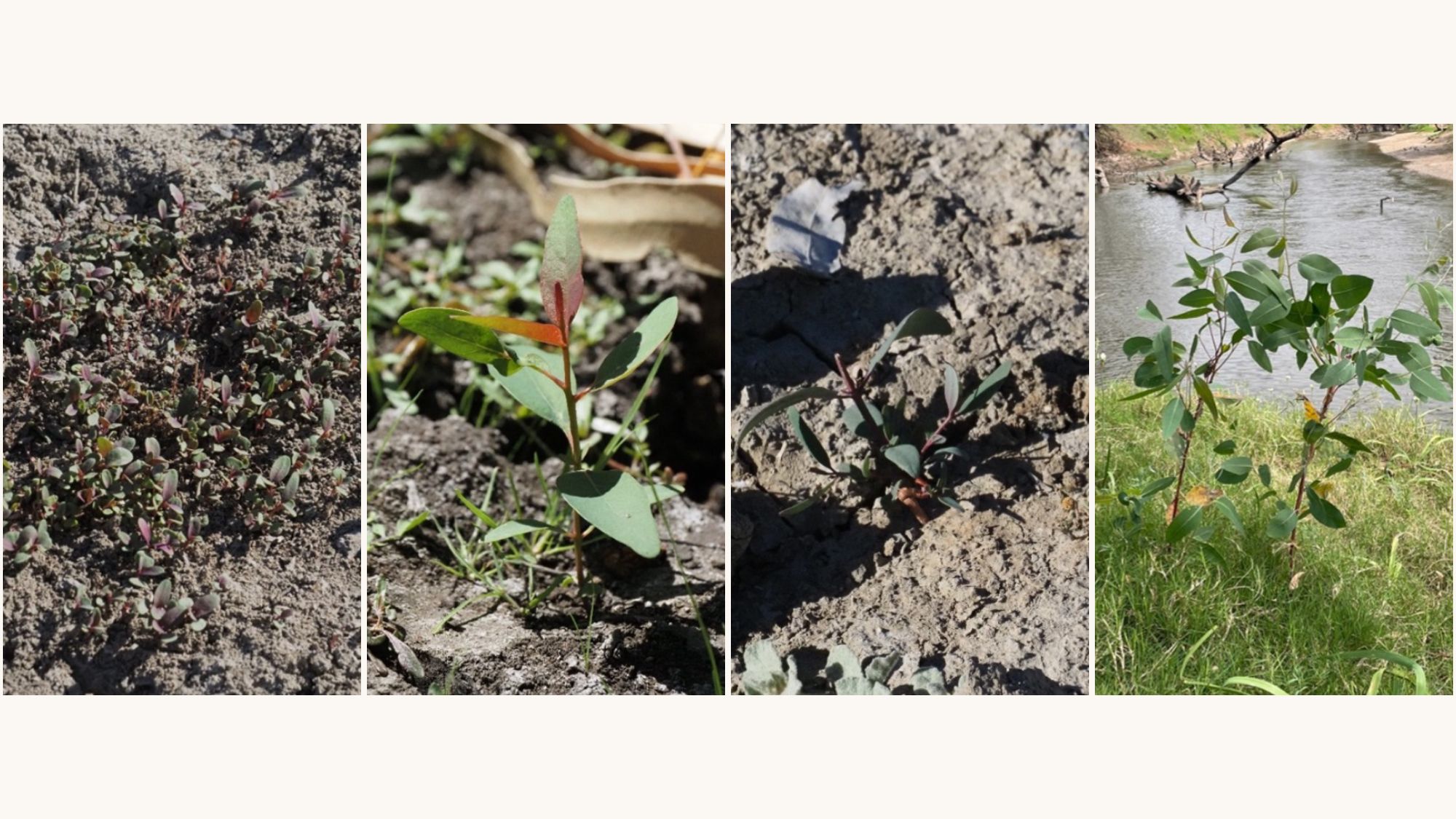
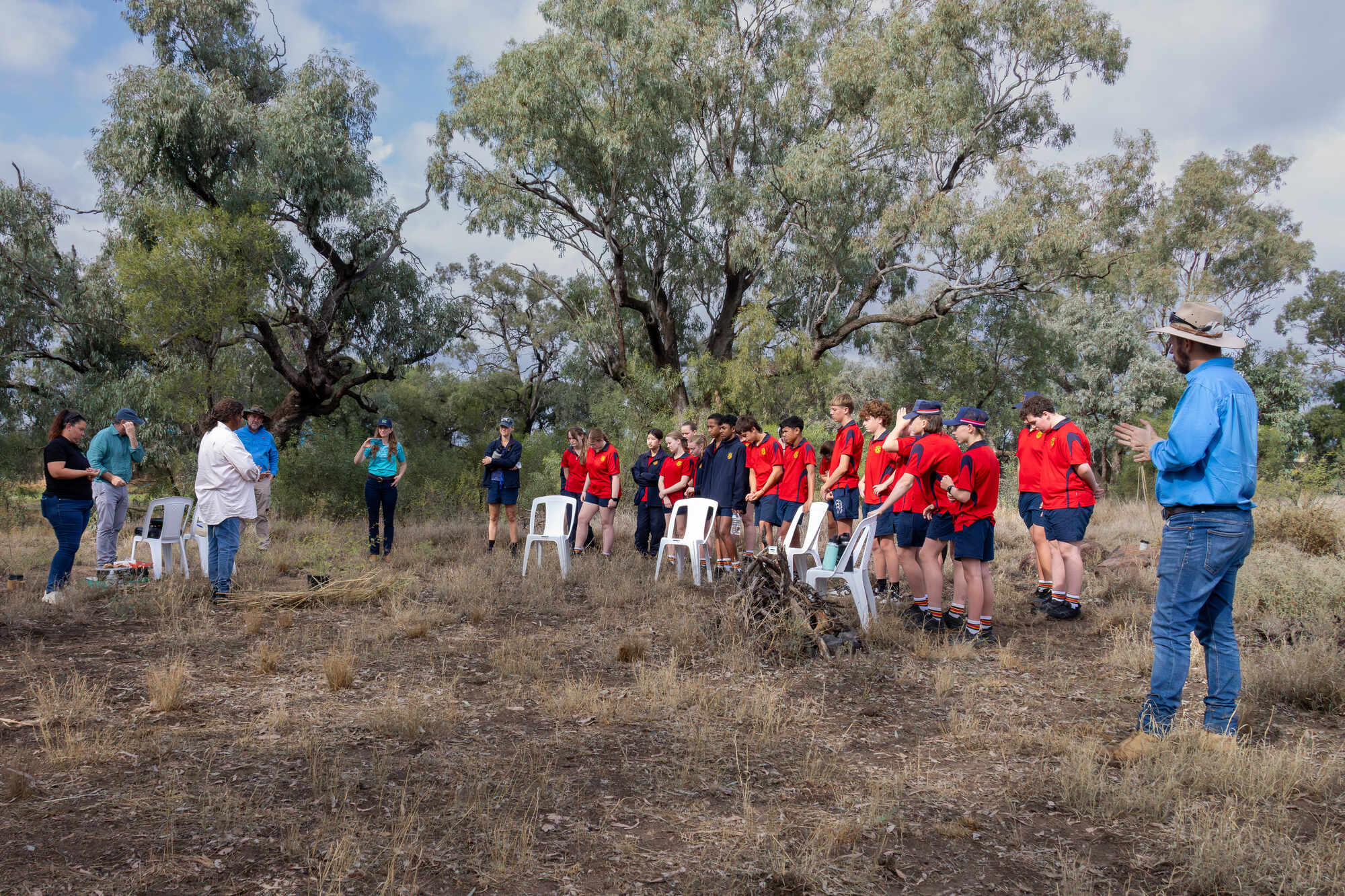
Vegetation surveys were jointly undertaken by NSW DCCEEW and University of New England (as the Flow-MER provider) in the Gingham, Lower Gwydir, and Mallowa Wetlands, and on the Ballin Boora Creek in Spring 2024, and Autumn 2025. Analysis of vegetation survey data showed that native species richness and cover both declined following the autumn inundation (see boxplots below). However, this is largely due to the time it takes for floodwaters to recede and for plants to germinate and grow from seedbanks stimulated by the water flows. This explains the higher species richness and native plant cover seen in spring 2024 were in response to autumn 2024 inundations.
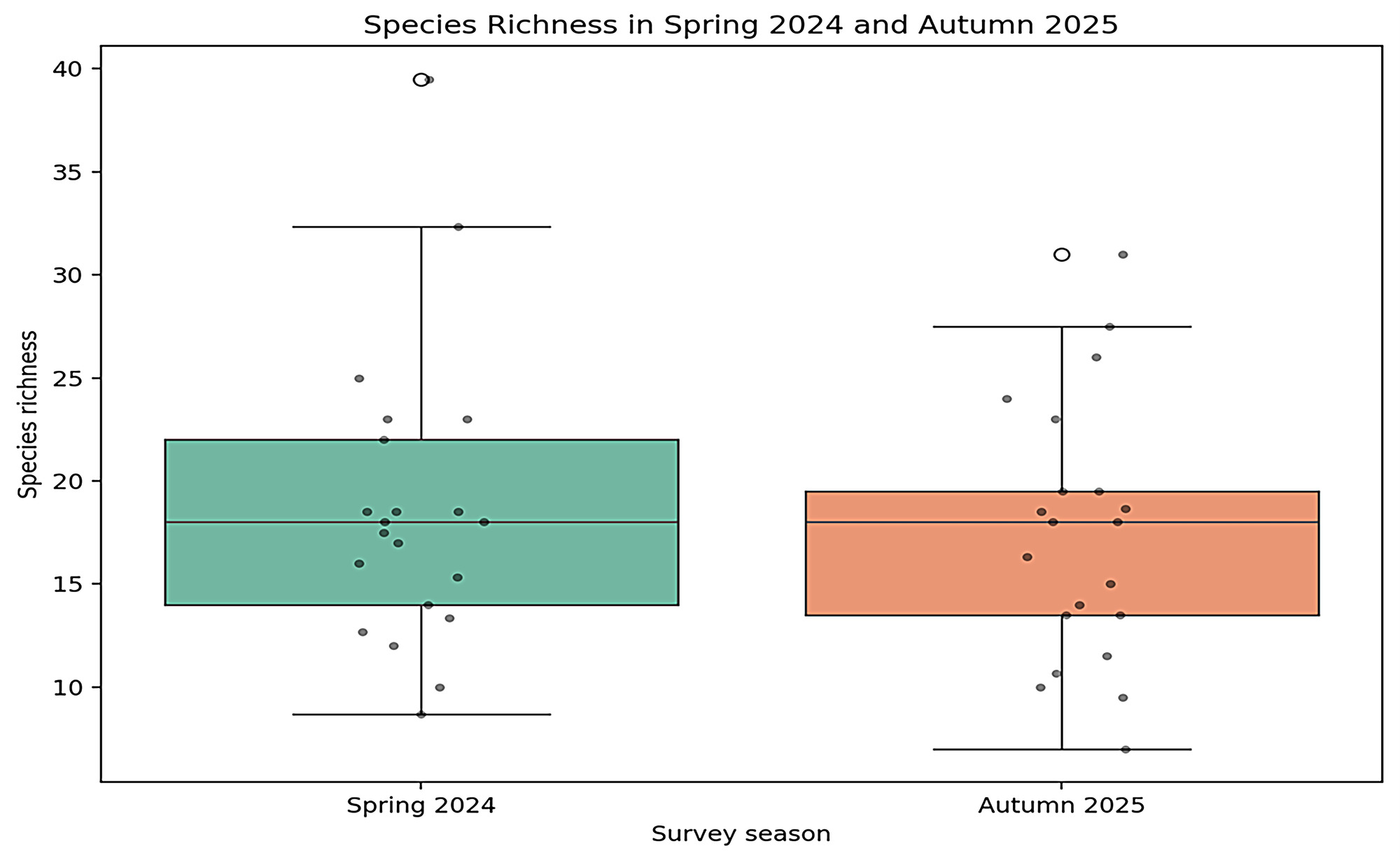
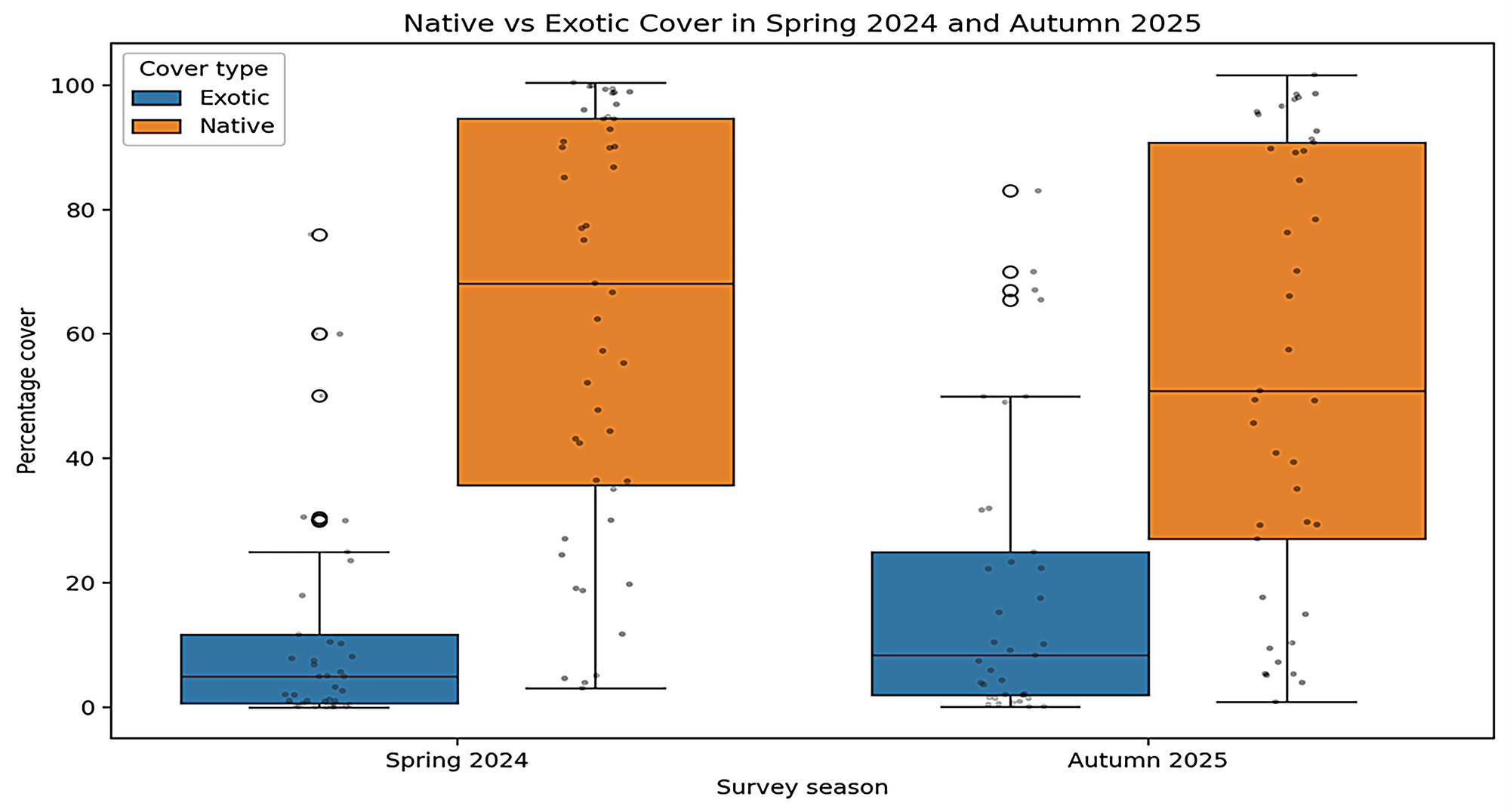
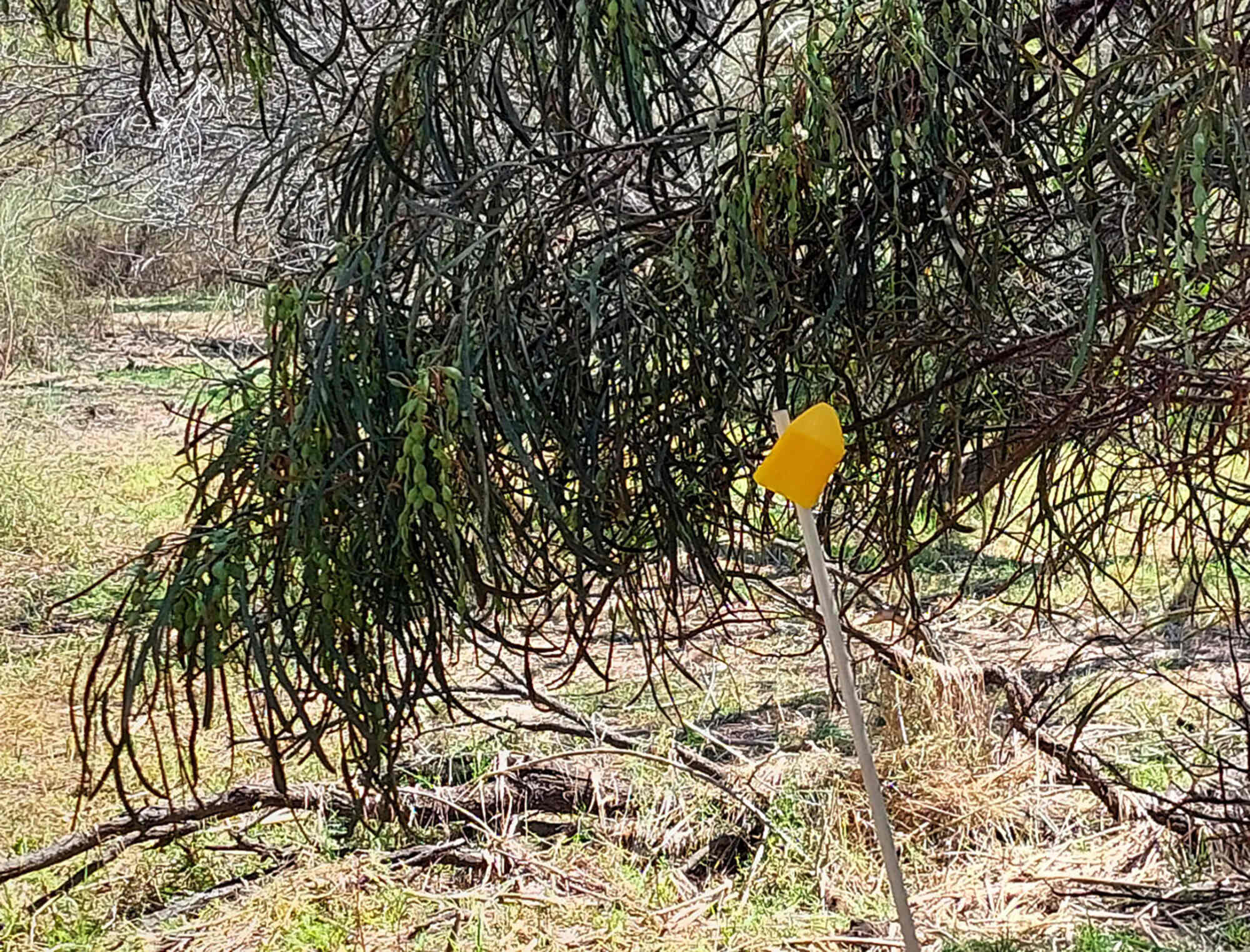
Native species richness was higher in 2024-25 than in 2023-24 results. Native vegetation cover has been maintained or increased and diversity maintained. Coolibah (Eucalyptus coolabah, Myrtaceae) recruitment (germination of seedlings) was patchy in both autumn and spring. The small coolibah recruitment added to the larger recruitment events that followed the 2021 and 2022 floods. River cooba (Acacia stenophylla, Mimosoideae) had a very good year for producing fruit in 2024-2025, with most trees and many saplings heavily loaded with maturing pods in spring 2024.
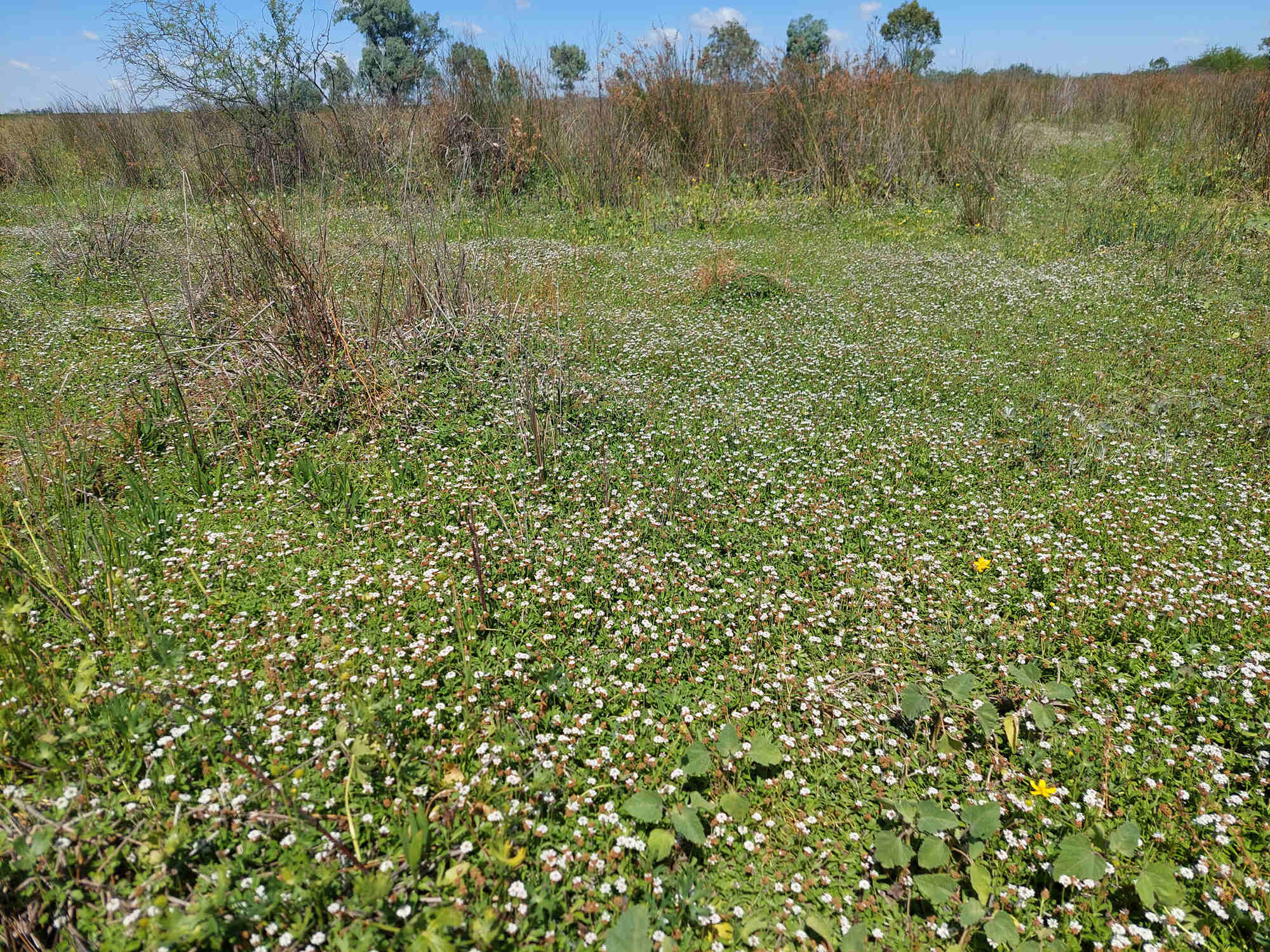
The highly invasive weed, lippia (Phyla canescens, Verbenaceae), cover increased in 2024-25 in several woodland and marshland sites as compared to 2023-24. In the Lower Gwydir on Old Dromana, lippia had increased in abundance and cover in most coolibah woodland sites and in the Elders marshland sites. This was in response to shorter inundation periods and drying back from previously wetter conditions at those sites. Up to 80% cover was observed in one site on Old Dromana, and 25-50% cover observed in the Elders marshland site plots, which appear not to be receiving sufficient inundation or duration of inundation events.
In wetland areas, lippia can form dense mats where and when shorter duration and shallow inundation occurs, or during a drying phase following longer inundation events. These conditions then favour lippia to outcompete almost all native ground-cover species. In contrast, marshland sites that experienced longer inundation periods during the 2024-25 year, such as in the Gingham, did not have the increase of lippia that was seen in many of the Lower Gwydir sites on Old Dromana.
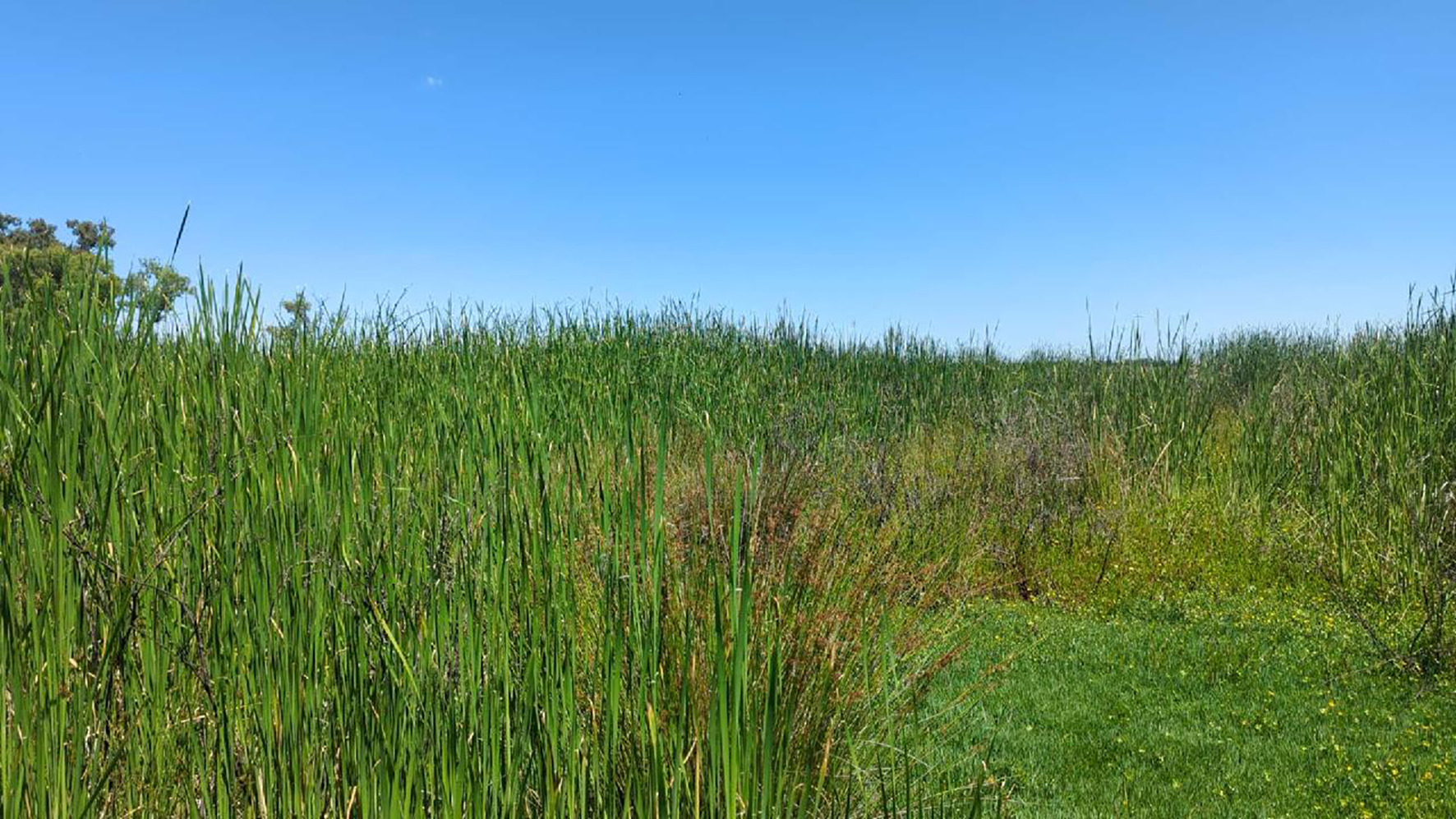
In the Gingham, however, which receives more environmental flows, the marshlands are in better condition, and lippia cover remains lower than in the Lower Gwydir.
Summary
Significant natural inflows, along with Commonwealth and NSW State water for the environment deliveries, and periods of above average rainfall, have resulted in good wetland inundation and duration across many of the sites in the Gwydir / Guwayda Wetlands for the fifth consecutive water year during 2024-25. This continued to have an overall positive influence on wetland vegetation communities in 2024-25.
The cumulative effects of successive good inundation events were most apparent in the promotion of water dependent species to be the dominant understory vegetation cover in most monitoring sites across the Gwydir / Guwayda Wetlands. This suggests that most areas of vegetation communities were in a wet-phase state and have remained in that state during most of the past five years, including 2024-25.
The wetland vegetation responses observed provide further evidence of the importance of widespread natural flooding and higher flow events, along with targeted water deliveries. These flows maintain and enhance vegetation extent, condition, and ecological function for water-dependent vegetation communities.
Future plans include the installation of water-depth loggers at selected vegetation sites to enhance our monitoring of inundation extent, depth, and duration. We will continue monitoring vegetation outcomes and conduct further analyses of vegetation responses to inundation variables (e.g., the duration a site is inundated versus the duration it is dry) to better inform future management actions, including managing water for the environment across the wetlands and watercourses of the Gwydir Area.
.avif)